Japanese women on social media are demanding the right to wear glasses to work, after stories that employers have been imposing bans. One Twitter person posted a screenshot of a news broadcast on the glasses ban, and wrote, “It will result in accidents,” in accordance with a translation. Japan’s consumption-oriented tradition also means that single women with careers and cash have a wide range of actions and emotional outlets that their mothers or grandmothers did not, Ms. Nemoto added. And, notably, Japanese women now not want husbands to ensure their economic security. Fed up with the double commonplace, Japanese women are increasingly opting out of marriage altogether, focusing on their work and newfound freedoms, but in addition alarming politicians preoccupied with attempting to reverse Japan’s declining population.
news
But in Japan, the trend is reversed, with part-time work amongst women rising over the previous 15 years. But there are additional obstacles for Japanese women. Although three.5 million of them have entered the workforce since Prime Minister Shinzo Abe took workplace in 2012, two-thirds are working solely part-time.
Mayor of Wuhan, epicenter of coronavirus outbreak, says 5 million people left town earlier than journey restrictions had been imposed
The shift is tied to the changing Japanese work drive. Close to 70 % of women ages 15 to 64 now have jobs — a report. But their careers are often held again by a relentless tide of home burdens, like filling out the meticulous daily logs required by their youngsters’s day-care centers, getting ready the intricate meals typically anticipated of Japanese women, supervising and signing off on homework from school and afterschool tutoring classes, or hanging rounds of laundry — as a result of few households have electrical dryers. But for increasingly Japanese women — who have historically been circumscribed by their relationships with men, kids and other family members — singlehood represents a type of liberation.
‘There are virtually no women in energy’: Tokyo’s female employees demand change
Earlier this 12 months there was a name for Japanese firms to stop forcing feminine employees to put on high heels. More than 21,000 folks signed a web-based petition started by a feminine actor in what has turn out to be generally known as the #KuToo motion. Yanfei Zhou, a researcher at the Japan Institute for Labor Policy & Training and creator of a e-book on the subject, “Japan’s Married Stay-at-Home Mothers in Poverty,” contends there’s a niche of 200 million yen ($1.eighty two million) in lifetime revenue between women who work full-time and girls who swap from full-time to half-time on the age of forty. More than 40% of part-time working women earn 1 million yen ($9,a hundred) or much less a 12 months, in accordance with Japan’s Internal Affairs and Communications Ministry.
“It provides a cold impression”: Why Japanese firms ban female staff from sporting glasses
The lack of benefits, job safety and opportunity for development—hallmarks of full-time employment in Japan—make such women financially vulnerable, particularly if they don’t have a partner to share expenses with. Japanese men typically see their compensation rise till they reach 60. For women, common compensation stays largely the same from their late twenties to their sixties, a fact attributable to pauses in employment tied to having youngsters or half-time, somewhat than full-time, work. Since the mid-2000s, half-time employment rates have fallen for women in more than half the countries that make up the OECD.

Japanese women demand proper to put on glasses at work
From obligatory excessive heels to a ban on glasses, Japanese women have been busy pushing back in opposition to restrictive and anachronistic gown codes within the office in 2019. Earlier this year, Japanese women began voicing their discontent with arcane office restrictions on their seems through the #KuToo motion, which drew attention to the requirement that many firms still have that ladies wear excessive heels to work. The term #KuToo is a triple pun, enjoying on the Japanese phrases kutsu (shoes), kutsuu (pain), and the #MeToo movement. The explosion of curiosity in discriminatory remedy against women on the office also comes amid a rising rejection of sexist norms in Japanese society because the #MeToo motion started gaining floor since 2018. According to the BBC, a number of Japanese outlets said companies have “banned” women from sporting eyeglasses and that they offer a “cold impression” to female store assistants.
“Comfort women” is a euphemism for the girls and women – lots of them Korean – pressured into prostitution at Japanese military brothels. The issue has plagued Japan’s ties with South Korea for decades. The Imperial Japanese Army requested the federal government to supply one “consolation woman” for each 70 soldiers, Japan’s Kyodo information company mentioned, citing wartime government documents it had reviewed, shedding contemporary mild on Tokyo’s involvement within the follow. The hashtag #メガネ禁止 (#GlassesBan) was trending on Twitter by Wednesday, with women and men saying they disagreed with the policy.
Today, such outright insults have faded as a growing number of Japanese women are postponing or forgoing marriage, rejecting the traditional path that leads to what many now regard as a life of domestic drudgery. Not so way back, Japanese women who remained single after the age of 25 had been referred to as “Christmas cake,” a slur comparing them to outdated vacation pastries that can’t be offered after Dec. 25. © 2020 Guardian News & Media Limited or its affiliated firms. All rights reserved.
“If the principles prohibit solely women to put on glasses, this is a discrimination in opposition to women,” Kanae Doi, the Japan director at Human Rights Watch, advised the Thomson Reuters Foundation on Friday. In the newest protest in opposition to rigid rules over women’s appearance, the hashtag “glasses are forbidden” was trending on Twitter in reaction to a Japanese tv show that uncovered businesses that had been imposing the bans on female workers.
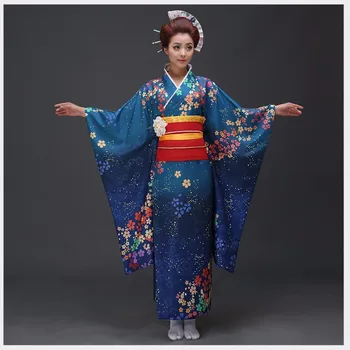
Traditional Japanese eating places stated that glasses merely don’t go properly with traditional Japanese dress. The hashtag “glasses are forbidden” (#メガネ禁止) has been trending on social media in Japan this week following the airing of a program on the Nippon TV community exploring how companies in several sectors don’t enable feminine staff to put on glasses on the job. The program followed a report published late last month by Business Insider Japan (hyperlink in Japanese) on the identical problem.
The refrain of discontent in opposition to the glasses ban echoes an analogous phenomenon in South Korea final yr, when a feminine information anchor broke ranks and decided to put on glasses as an alternative of putting on contact lenses for her early morning show. The sight of a lady wearing glasses studying the information not solely shocked viewers, but additionally prompted a neighborhood airline to evaluation its personal policies and permit female japanese women cabin crew to wear glasses. The program listed a variety of causes that employers gave for not wanting women to put on glasses while at work. Domestic airlines said it was for security reasons, companies in the magnificence trade stated it was troublesome to see the employee’s make-up correctly behind glasses, whereas main retail chains stated female shop assistants give off a “chilly impression” if they put on glasses.
With entitlement costs skyrocketing, the government has responded by scaling again advantages while proposing to lift the retirement age. Some Japanese responded by shifting cash out of low-interest financial institution accounts and into 401(k)-type retirement plans, hoping investment gains might soften the blow. But such a strategy requires savings, and women in Japan are less more likely to have any.
